M u s i c
This project uses sounds and data gathered from the river Tyne to make tunes, melodies and electroacoustic processing systems to create its music. Live, it is performed by The Salmon Band.
The score uses the river’s map and changing topography over time.
The libretto, words and songs are made by research into the Atlantic salmon (salmo salar) nationally and locally as well as through collaboration with children who live near the river itself. An expansive, collaborative and site specific process therefore.
Sounds have been gathered by making underwater recordings using hydrophones in the river from the sea at Tynemouth on the coast, along the north Tyne up to Kielder, the river’s source. Data used has been collected by the Environment Agency North East (EA) since 1996. The artists have so far worked with data gathered during 2010.
1.WORKSHOPS with children.
 Some of the workshop music made so far with children from Bellingham and Prudhoe Middle Schools, Northumberland in November 2011.
Summer caddis fly tune(Bellingham) is a sonification of the name of the species devised with the children, and Swim for Summer groove is from the number of salmon that passed up the Tyne in October 2010.
Data courtesy of the Environment Agency North East. Workshops supported by National Lottery through Arts Council England.
2.COMPOSITIONS
Stereo extract of 12 channel live performance by KM @ Presence Electronique, Paris 2011. Where are the wild ones (stereo xtr)
REVIEW from performance, Santa Barbara, USA,April 2011.
 Score: 22’15” – 32’17”
“Where are the wild ones? – part one” was a RIVERS commission from Laura Harrington and Environment Agency, for AV Festival 10 which premiered on March 14th 2010 at The Sage, UK. Matthews has since made 10 performances of this work in London, Paris, New York, Santa Barbara, Montreal, Brest, Vienna and Geneva.
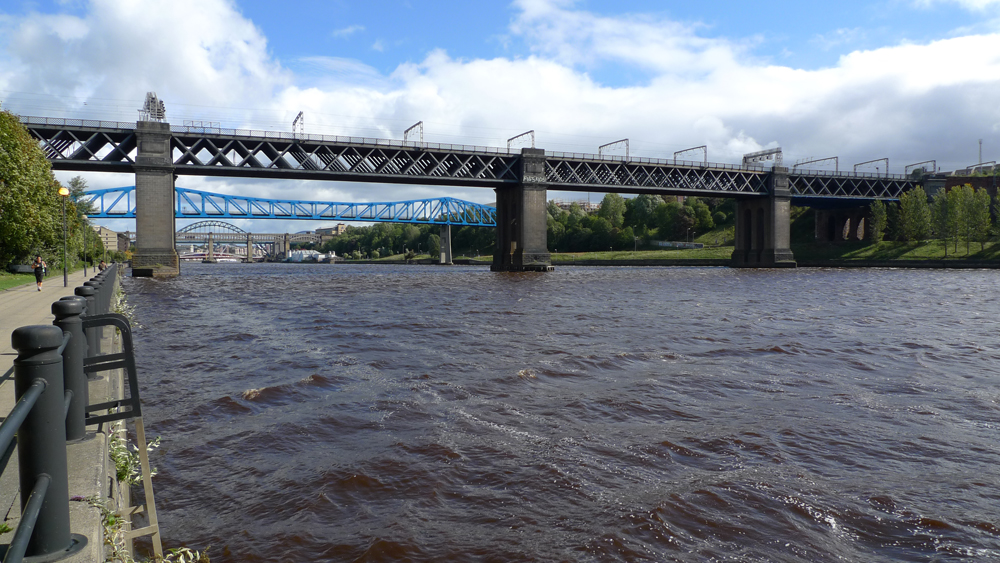
A work for solo performance through 12 channels made from underwater recordings gathered by Matthews from sea to source up the river Tyne, winter 2010. The rivers’ route is her score as she develops Atlantic salmon language to navigate its changing topography from Tynemouth to Kielder water.
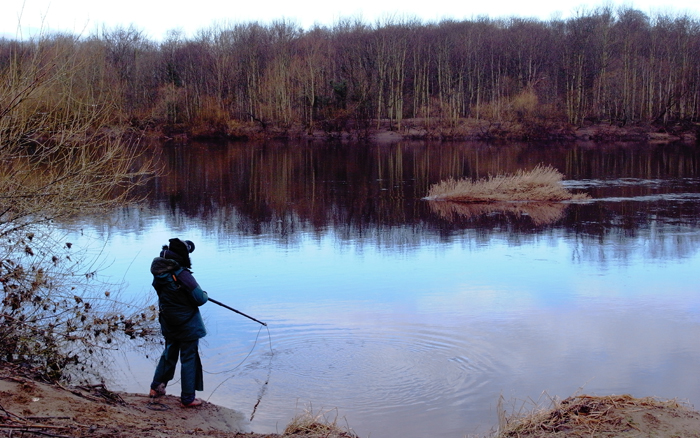
Salty sweet pink fish meat sold in sealed plastic is available all over the place these days. It’s called salmon and down London ways we regularly scoff it with glee. Up here I discovered the truth behind this awesome creature. That swims all the way from Greenland, back to the river in which it was born to spawn. It seems once they’ve decided to come, the salmon find their river from the taste of its water then swim all the way up against its rushing current, navigating the concrete narrow fish passes beside weirs and waterfalls and the still, shallow patches all the way to its source. And they might take eight months to do this, and they don’t eat at all.
Today the River Tyne sees the greatest number of Atlantic Salmon passing up its waters in the UK. People come from all over the world paying thousands to catch these magnificent silvery creatures which they then have to throw back. I decided to take the journey these fish take, meeting and hearing the force and melody of this always moving water. Incidentally, my research found that salmon themselves are completely silent.
km march 2010
See NEWS from Monday January 18th to Sunday 14th March 2010 for Research Blog. on the making of WWOnes, part1 2010.
SCORE.
FROM THE NORTH ATLANTIC, THE WILD SALMON enters THE RIVER TYNE
@38 NS(numbers written along the horizontal
68 WE (numbers written along the vertical)
(North Shields Fish Quay 36 68 )
Drops south to 35 66 (Jarrow, south of river)
West east to 30 66 (Wallsend, north of rive)r
South to 30 63 (Gateshead @ 25 63)
West east to 18 64 (just past Blaydon)
West east to 07 63
West east 05 04 03 02 62 (Riding mill)
Climbs NW to 92 66 (, passing Corbridge, Hexham, to Bridge End)
(note that from 00, numbers begins to reverse, 99 98 etc)
North to 71 92 (Chollerford)
North to 73 92 (Barrasford, just round small bend)
North west to 86 82 (Bellingham)
North West to 72 88 (Kielder Water)
And hits BANG
THE DAM : KIELDER WATER
Kielder Burn is North west at 93 63
The Salmon hatchery is 63 93
Score: 0’00”- 12’00”